
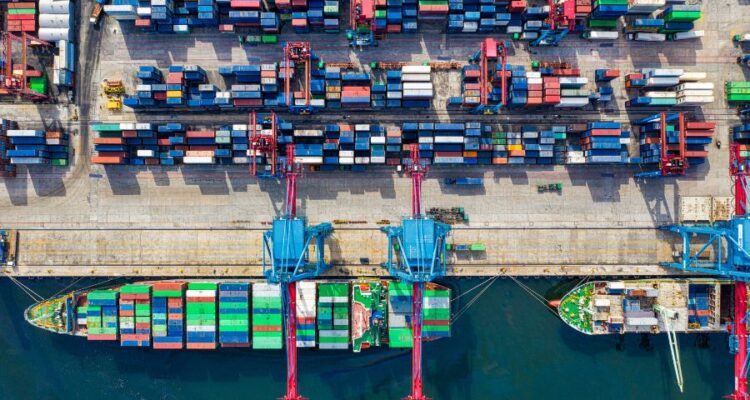
Global trade continues to evolve in 2026, and customs authorities are under increasing pressure to inspect growing cargo volumes without slowing down supply chains. Rising trade volumes, stricter border security measures, expanding e-commerce, and ongoing geopolitical uncertainties have made faster and more accurate cargo inspections a top priority. As a result, non-intrusive scanning (NII) technologies are becoming an essential part of modern customs operations, helping customs agencies improve security while keeping international trade moving efficiently.
For businesses involved in international freight, customs clearance has always been one of the most critical stages of the supply chain. Today, advanced scanning technologies are helping customs agencies inspect shipments efficiently while reducing delays, improving security, and supporting legitimate global trade. For logistics providers like Heritage International Freight Limited, these advancements create opportunities to deliver smoother import & export services while ensuring compliance with international regulations.
Non-intrusive scanning refers to the use of advanced imaging technologies such as X-ray, gamma-ray, and high-energy cargo scanners—to inspect containers, trucks, and cargo without physically opening them.
Unlike traditional manual inspections, NII systems allow customs officers to detect hidden goods, identify security threats, and verify shipment contents within minutes. The result is faster customs processing with minimal disruption to cargo movement.
As governments continue investing in smarter border infrastructure, these technologies are becoming standard at major ports, airports, and land border crossings worldwide.
Global customs agencies face several ongoing challenges:
According to recent initiatives by customs authorities across Europe, Asia, and the Middle East, investments in AI-powered cargo screening and advanced scanning systems are accelerating to improve border efficiency while maintaining high security standards.
The World Customs Organization (WCO) and many national customs administrations continue encouraging digital customs modernization, making non-intrusive inspection technologies a key component of future trade infrastructure.
One of the biggest advantages of non-intrusive scanning is speed. Containers that previously required lengthy physical inspections can now be scanned in just a few minutes.
This significantly reduces waiting times at ports and border crossings while helping businesses maintain predictable delivery schedules.
Advanced scanners can detect concealed goods, undeclared cargo, narcotics, weapons, and other prohibited items without damaging shipments.
This improves border security while allowing compliant cargo to move efficiently through customs
Port congestion continues to affect international shipping in several regions during 2025. Faster cargo inspections help terminals process more containers daily, reducing bottlenecks and improving vessel turnaround times.
For companies providing freight forwarding and logistics solutions, quicker customs processing supports more reliable delivery performance.
Physical inspections require additional labor, storage, and cargo handling. Non-intrusive scanning reduces these operational costs while minimizing the risk of cargo damage during inspections.
Modern scanning systems integrate with digital customs platforms and risk assessment software. Authorities can identify high-risk shipments more accurately while allowing low-risk cargo to pass through with fewer delays.
This creates a more efficient environment for compliant importers, exporters, and international freight forwarder partners.
The latest generation of customs scanning goes beyond imaging technology.
Artificial intelligence is now helping customs officers automatically analyze scanned images, identify suspicious cargo patterns, and prioritize inspections based on risk profiles.
Machine learning algorithms improve detection accuracy over time, reducing human error while enabling customs agencies to process larger cargo volumes without increasing inspection times.
Several countries are already piloting AI-assisted customs inspection systems as part of broader digital trade modernization initiatives.
For businesses engaged in global trade, faster customs procedures offer significant operational advantages:
As customs processes become increasingly digital, companies that prepare accurate documentation and work with experienced logistics providers will benefit the most.
As international trade regulations continue evolving, Heritage International Freight Limited helps businesses navigate changing customs requirements with reliable logistics expertise.

From customs brokerage and warehouse services to global freight management, the company supports efficient cargo movement while helping clients remain compliant with international customs procedures.
By working closely with customs authorities and trusted logistics partners, Heritage International Freight Limited enables businesses to adapt to emerging technologies that improve border efficiency and supply chain reliability.
As digital customs systems continue expanding worldwide, Heritage International Freight Limited remains committed to delivering dependable logistics solutions that support secure and efficient international trade.
Non-intrusive scanning is no longer an emerging technology—it is becoming the global standard for modern customs operations. As governments continue investing in AI-driven inspection systems, digital customs platforms, and smart border infrastructure, cargo inspections will become faster, safer, and more accurate.
For businesses operating in today’s competitive marketplace, partnering with experienced logistics providers and staying prepared for evolving customs processes will be essential for maintaining resilient global supply chains.
As customs procedures continue to evolve with advanced non-intrusive scanning technologies, having the right logistics partner can make all the difference. Whether you need freight forwarding, customs brokerage, warehousing services, or complete import & export services, Heritage International Freight Limited is here to help.
Our experienced team ensures your shipments move efficiently through customs while keeping your supply chain compliant, secure, and on schedule.
Get in touch with Heritage International Freight Limited today to discover how our tailored logistics solutions can support your global trade operations.
It reduces customs clearance times, minimizes port congestion, improves supply chain security, lowers inspection costs, and supports smoother international cargo movement.
Yes. Many customs administrations are adopting AI-powered image analysis and risk assessment systems to improve cargo screening accuracy and speed while detecting suspicious shipments more effectively.
With growing global trade, increasing security concerns, and continued pressure to improve border efficiency, customs authorities are expanding non-intrusive scanning as part of digital modernization efforts.
Heritage International Freight Limited provides professional customs brokerage, logistics solutions, freight forwarding, and warehouse services that help businesses comply with customs regulations while improving shipment efficiency.
[…] Arctic shipping route is moving from a long-term concept toward a commercially relevant option for global trade. In August 2026, China launched a regular cargo service through Russia’s Northern Sea Route […]
[…] September 2026, APEC highlighted that around four billion paper documents still circulate through global trade every year, while less than 1% are fully digitalized. It also noted that differences in legal frameworks, […]